People fish Lake Wylie for three main reasons: largemouth bass in the spring shallows, crappie around the docks and brush, and catfish that get genuinely big in the channel. The lake covers about 13,400 acres across the North Carolina and South Carolina line, averages just over 20 feet deep, and holds fish year-round. The one thing to sort out before your first cast is the license, because this is a two-state lake with no shortcuts.
If you are new to the lake itself, Lake Wylie basics explains the layout, and the boating guide covers ramps and rentals for getting a line in deeper water.
The license question, answered once
North Carolina and South Carolina do not have a reciprocal fishing license agreement for Lake Wylie. That sentence, confirmed by both states' guidance and repeated by every local guide service, drives everything else:
- A North Carolina license covers North Carolina water only. A South Carolina license covers South Carolina water only.
- The state line runs through the lake, roughly across its middle. Cross it with a line in the water and you need the other state's license too.
- In South Carolina waters, anyone age 16 or older needs a valid SC Department of Natural Resources fishing license. York County sells them at the Allison Creek Park office, and both states sell licenses online and through tackle shops and sporting goods stores.
The practical move for a fishing weekend: buy both. A short-term license in the second state costs less than the fine, and it frees you to follow the fish instead of watching an invisible line. If you plan to fish from one dock or one bank all weekend, a single license for that side is fine. The SC Department of Natural Resources page for Lake Wylie is the official starting point for the South Carolina side, including the lake's managed fish attractors.
What is in the lake
Largemouth bass are the draw. Wylie is a long-standing stop for local and regional bass tournaments, and the fishery is built on shoreline structure: docks, riprap banks, points, and creek channels. Spotted bass share the main lake. Crappie, both black and white, school around brush, submerged timber, bridge pilings, and dock cover, and they are the lake's most reliable table fish. Catfish come in three flavors here: channel catfish almost everywhere, blue catfish in the channel and river reaches that run very large, and flatheads for the night anglers. White perch and bluegill fill in the gaps and keep rods bent between bigger fish, which makes them the right target when kids are fishing from a dock.
SCDNR maintains six fish attractors on the lake and monitors the bass, crappie, and catfish populations to keep the fishery healthy. A longer species and tactics rundown is at Take Me Fishing's Lake Wylie tips, which makes the same point local anglers do: on Wylie it is seldom a question of where the fish are, and mostly a question of depth and time of day.
The year in fishing seasons
Spring (March to May) is prime time. Bass stage on points and channel swings in late winter, then push into protected pockets, marinas, and coves to spawn as the water warms into the 60s. Crappie move into 2 to 8 feet of water around docks and woody cover to spawn, and dock shooting with small jigs in chartreuse and natural shad colors is the standard technique. If you get one season on this lake, take this one.
Summer (June to August) moves everything. Bass go deep or nocturnal: offshore humps, ledges, and shaded docks by day, spinnerbaits and big worms around docks and riprap after dark. The lake's stained, shallow character makes its night bass fishing better than most Charlotte-area lakes. Catfish peak in summer, anchored on channel edges with cut bait, best in the evening and at night. Crappie retreat to deeper brush and bridge structure and bite best at dawn and dusk.
Fall (September to November) is the second season. Cooling water pulls bass shallow again behind schools of shad, and crappie fishing in 8 to 12 feet around cover is consistently good. The lake is quieter, the ramps are empty, and the fishing is as good as spring with half the company.
Winter (December to February) sorts the committed from the casual. Crappie stack on deep brush piles and bridge pilings and take small jigs and minnows; local guides run winter crappie trips all season. Bass go deep and slow. The warm-water discharge near the Allen Steam Station on the north end concentrates baitfish and gamefish in cold months, which makes it one of the better winter bets around Charlotte.
Where to fish
From a boat, work the creek arms first. Big Allison Creek on the South Carolina side is the name that comes up most for bass and crappie, spring and fall. Main-lake points in 10 to 15 feet hold staging bass; riprap along the bridges holds fish nearly year-round; the Buster Boyd Bridge area is known locally for striped bass in summer and crappie on its pilings in winter. The river end of the lake, up toward the South Fork and Catawba confluence, is the classic water for the biggest blue catfish: road beds, creek channels, and rocky points with cut bait.
From the bank, the county parks do the work. Ebenezer Park has a fishing pier and bank access (bank fishing is restricted on or within 50 feet of the boat ramps, and not in the swimming area). Allison Creek Park has a fishing dock. South Point Access near Belmont has two large fishing piers. McDowell Nature Preserve has piers on the Charlotte side. Tournament mornings at Buster Boyd Access and Ebenezer are a local institution and a good free education: watch where the boats run and you have a map of the lake's productive water. Ramp and marina details are in the marinas and boat ramps guide.
Tackle and bait that work here
Wylie's water runs clearer in summer and fall and stains after rain, and local advice adjusts with it. In dirty water, bright spinnerbaits and rattling crankbaits get the nod for bass. In clear water, jerkbaits, jigs, and Carolina-rigged worms are the consistent producers. Work the shoreline riprap, the drop-offs and edges, and the shallows around the lake's many islands, and use a fish finder to locate the schools rather than guessing: crappie in particular stack vertically around cover, and finding the school is most of the job.
For crappie, light line, small hooks, live minnows, and small jigs cover nearly every situation on this lake, from dock shooting in spring to deep brush in winter. For catfish, a slip sinker or Carolina rig with cut bait is the standard setup, fished on channel edges, road beds, and rocky points. Bluegill and perch take the usual panfish offerings, worms and crickets, and they are the right call when the goal is steady action off a dock rather than a trophy. None of this requires exotic gear. It requires being on the right depth at the right hour, which on Wylie usually means early, late, or after dark.
Fishing from the house
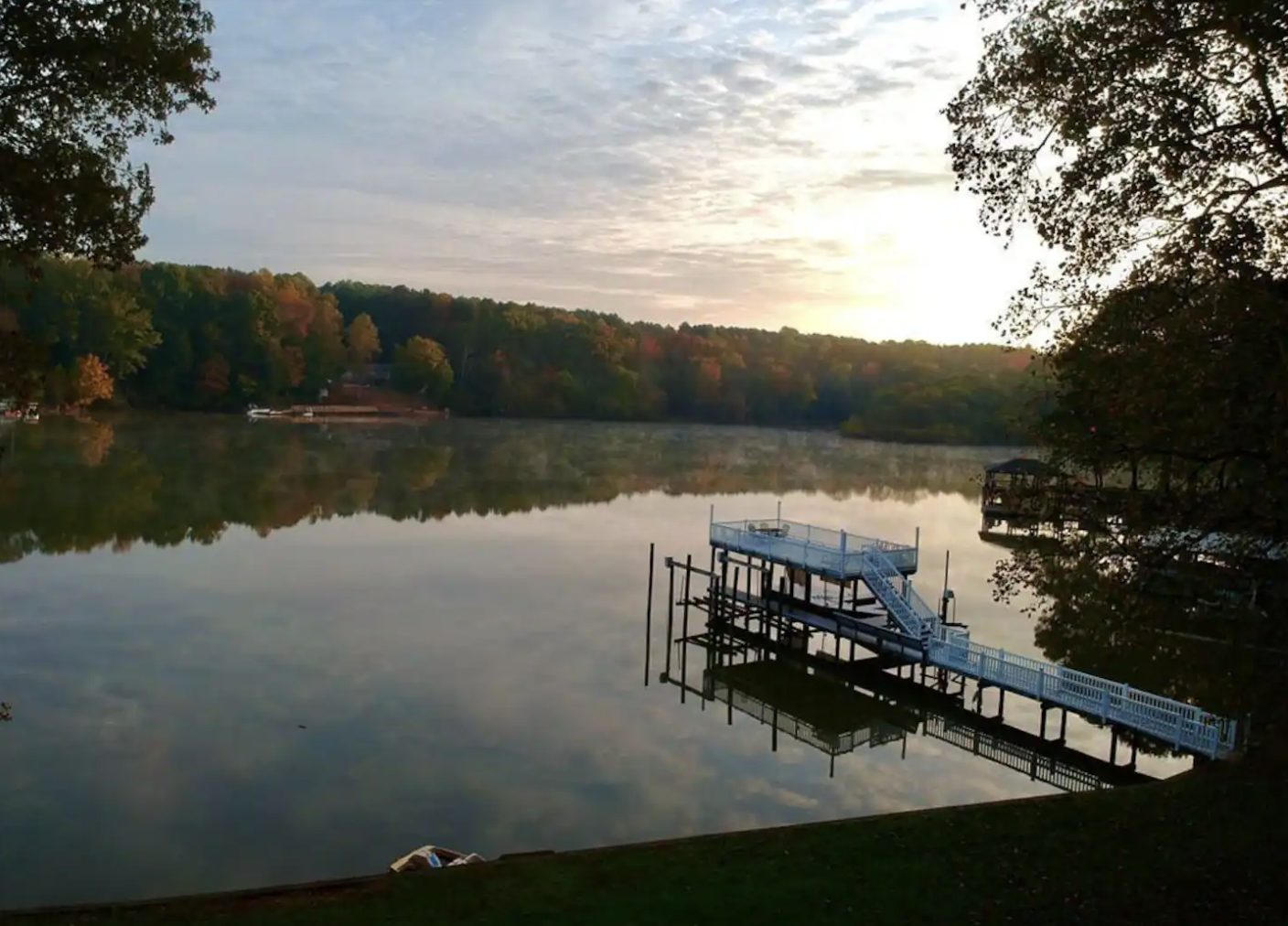
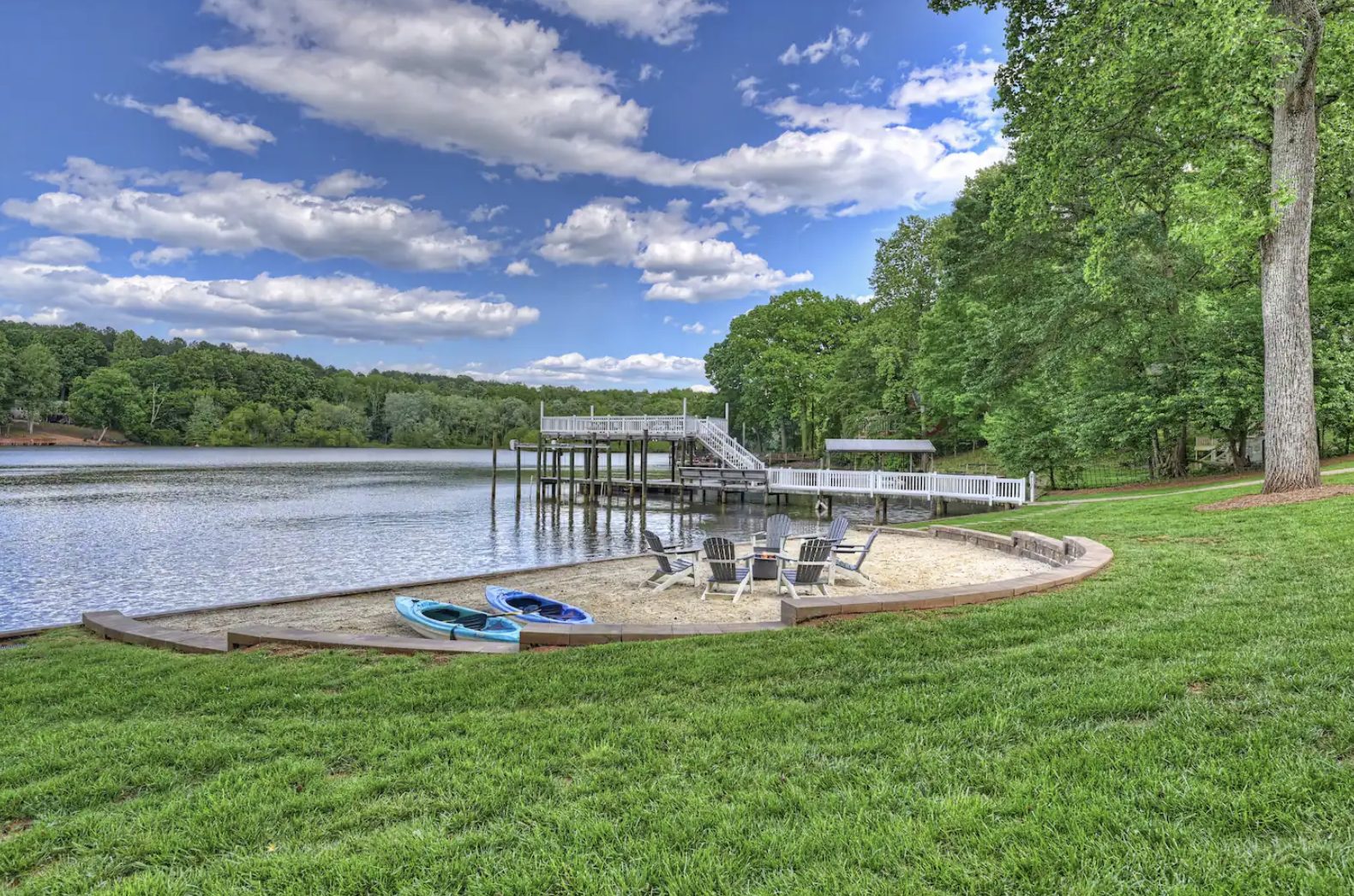
A private dock changes the fishing day. At Windygap Retreat, which sleeps 16 on the Charlotte side of the lake, the dock is at the end of the yard: crappie and bluegill off the pilings in the morning, catfish lines out after dinner, and no ramp line at any point. Guests keep tackle at the house, fish the first and last light that day-trippers miss, and use the kayaks provided to work the cove quietly.
Licenses still apply from a private dock, and the state line question still matters the moment you take a boat or kayak out. Sort the paperwork before the trip, then book direct to skip the 12 to 15 percent platform fee on the stay itself.