Boating is the main event on Lake Wylie. The lake covers about 13,400 acres with 325 miles of shoreline, which turns into dozens of coves and creek arms once you are on the water. You do not need to own a boat to use it: marinas rent pontoons on both ends of the lake, and public ramps ring the shoreline. What you do need is a basic grip on where to launch, where the slow water is, and which state's rules you are under, because the NC/SC line runs right down the lake.
This guide covers rentals, ramps, and rules. For slip storage, fuel docks, and ramp-by-ramp detail, see the marinas and boat ramps guide. For the lake's layout and history, start with Lake Wylie basics.
Renting a boat
Pontoon boats are the standard rental on Lake Wylie, and for good reason. They carry 10 to 14 people, they are stable at anchor in a cove, and they forgive a new driver's mistakes better than a bowrider does.
- Tega Cay Marina, at the southern end of the lake in Tega Cay, South Carolina, rents from a fleet of 14 pontoon boats. It has covered and open slips, a fuel dock with 89 octane gasoline, and a ship's store with snacks and fishing supplies. It is the natural rental stop for the lake's southern half.
- Pier 88 Yacht Club, at River Hills Marina on the South Carolina side, rents pontoons by the morning, afternoon, or full day, and sells 89 octane ethanol-free fuel. River Hills is a gated community, so rentals there run on reservations. Book ahead rather than showing up.
- Belmont, on the north end, has rental outfits along River Drive that put you on the upper lake near the South Fork and Catawba river arms. Full-day rentals typically run nine hours and half days four, which suits the north end's longer, quieter water.
Expect the rental routine to be the same everywhere: a damage deposit, a fuel policy (some include the first tank, most do not), a firm return time, and a short briefing on the boat. Rental drivers need prior boating experience at most outfits, and age minimums for the driver are common. On a summer Saturday, reserve days ahead. On a weekday, a morning call often works.
Launching your own boat
Duke Energy maintains six public boat access areas on Lake Wylie, and the counties add more. The ramps that handle most of the traffic:
- South Point Access, Belmont (NC). Six ramps, two large fishing piers, and a big parking lot at a 68-acre Gaston County park. Launching a boat is free; the park charges a per-vehicle parking fee in season ($7 per vehicle, $20 per bus, cashless). This is the main north-end launch.
- Allison Creek Park, York (SC). Four ramps, open 365 days a year, inside a 160-acre York County park with a kayak launch, fishing dock, and campgrounds. York County's boating page notes that night access cards are sold at the park office if you want to launch after the park closes.
- Ebenezer Park, Rock Hill (SC). Three ramps at the 26-acre York County park on the lake's southern shore, plus a beach and a fishing pier. It fills early on tournament mornings.
- Buster Boyd Access, Lake Wylie (SC). The ramp by the Highway 49 Buster Boyd Bridge, close to stores and restaurants. Popular, free, and busy. A common starting point for fishing tournaments.
- Nivens Creek and Copperhead Island. Smaller access areas that serve the lake's eastern and Charlotte-side shores. Copperhead Island, inside the McDowell Nature Preserve area, suits smaller boats and paddlers launching alongside trailer traffic.
Trailer parking is the real constraint everywhere. When the lot is full, the ramp is effectively closed, whatever the sign says. Launch before 10 AM on weekends, and load out before the late-afternoon rush or after it.
How the lake runs: channels, coves, and slow water
The main channel follows the old Catawba River bed down the middle of the lake, marked and deep, up to roughly 94 feet near the Wylie Dam. That is the fast water: skiing, tubing, and running between ends of the lake happen there, along with most of the traffic and most of the chop on a windy afternoon.
The creek arms are the slow water. Big Allison Creek, Little Allison Creek, Paw Creek, and the coves off Tega Cay and River Hills are where boats anchor up. Two sandbars draw regular crowds: the NC sandbar, shallow enough to stand in at 3 to 4 feet, is the family spot; the SC sandbar at the back of Little Allison Creek runs livelier. Both are boat-only destinations, anchor and swim.
No-wake zones are posted where you would expect them: at ramps, around marinas and fuel docks, in bridge passages, and in marked swimming areas. Personal watercraft have their own spacing rules, including a 100-foot minimum from other vessels, docks, and swimmers at speed in North Carolina. The practical rule everywhere on the lake is simple: if there are swimmers, docks, or anchored boats near you, come off plane.
The rules that change at the state line
Lake Wylie is two legal jurisdictions sharing one body of water, and patrol boats from both states work it. The differences worth knowing:
- Life jackets for kids. North Carolina law requires anyone younger than 13 to wear a life jacket when a vessel is underway. Duke Energy's summary of the two states' laws puts South Carolina's cutoff at under 12, on boats under 16 feet. The two rules overlap enough that the easy answer is to keep every kid under 13 in a jacket on the whole lake. Duke also stocks free life jacket loaner boards at some access areas, including South Point; see its water safety write-up.
- Boater education. North Carolina requires a safety certificate for operators born on or after January 1, 1988 who run a motorboat of 10 horsepower or more. Carry the card.
- Alcohol. Operating a boat while impaired is illegal in both states; North Carolina enforces a 0.08 blood alcohol limit, the same as its roads. The driver stays sober. Passengers drinking is normal lake behavior; a drunk operator is who the patrol is looking for.
- Registration. Motorboats must be registered in their home state, and an out-of-state boat used in North Carolina waters past 90 days needs NC registration. Keep the paperwork on the boat.
Enforcement is heaviest on holiday weekends and around the sandbars and bridges. None of the rules are exotic; they only surprise people who assume the whole lake follows one state's book.
A realistic day on the water
Launch by 9 or 10, run the main channel while it is still smooth, and spend the middle of the day anchored in a cove or on a sandbar while the channel churns. Ski and tube early or after 5 PM when the traffic thins. Watch summer afternoons for the pop-up storms the Carolinas are known for; a cove with a high bank beats a run across open water when a cell builds. Check the lake level before you go if you are launching a deep boat at a shallow ramp, since Duke moves water through the system and levels do shift.
Staying on the water instead of driving to it
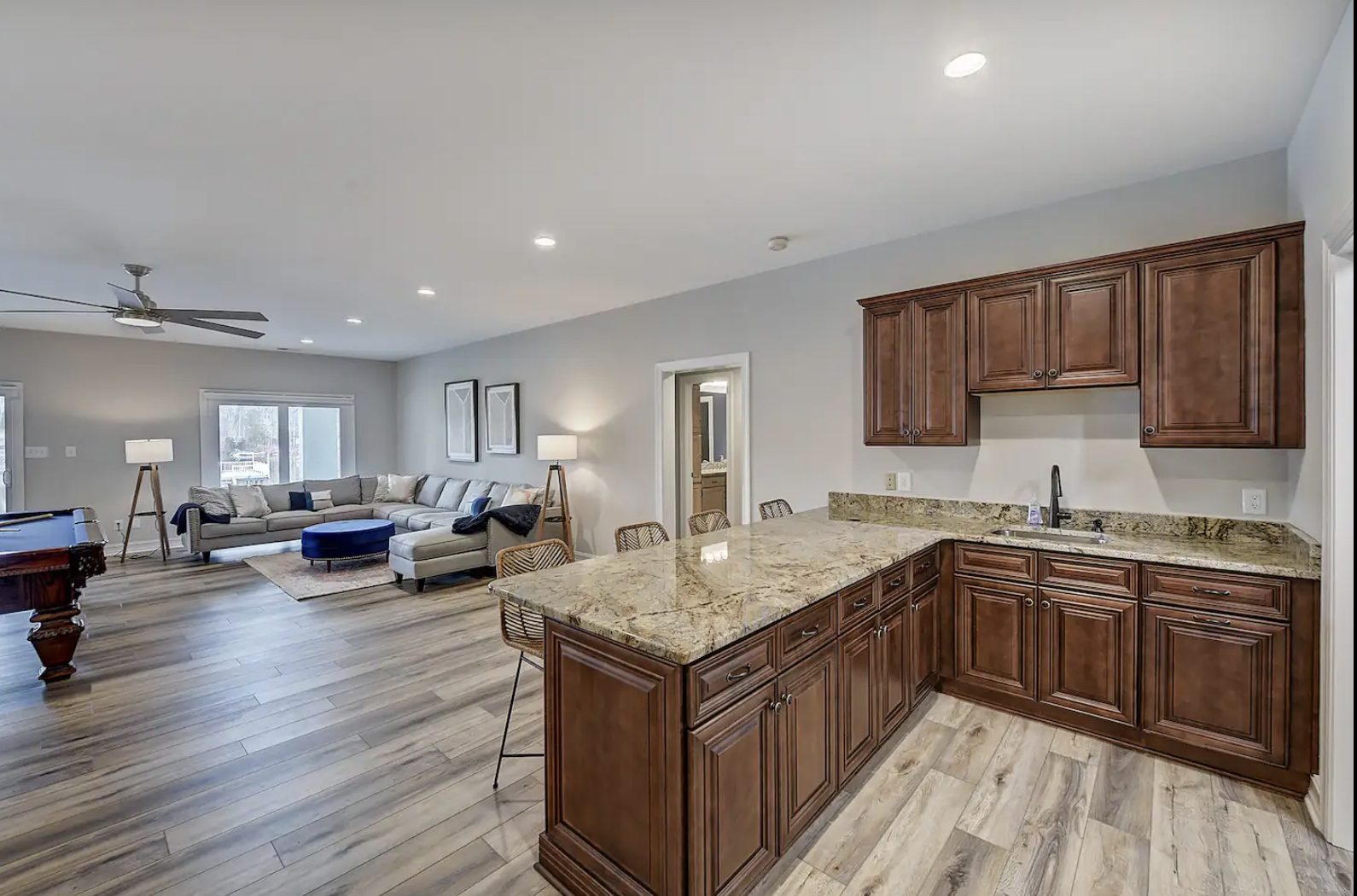
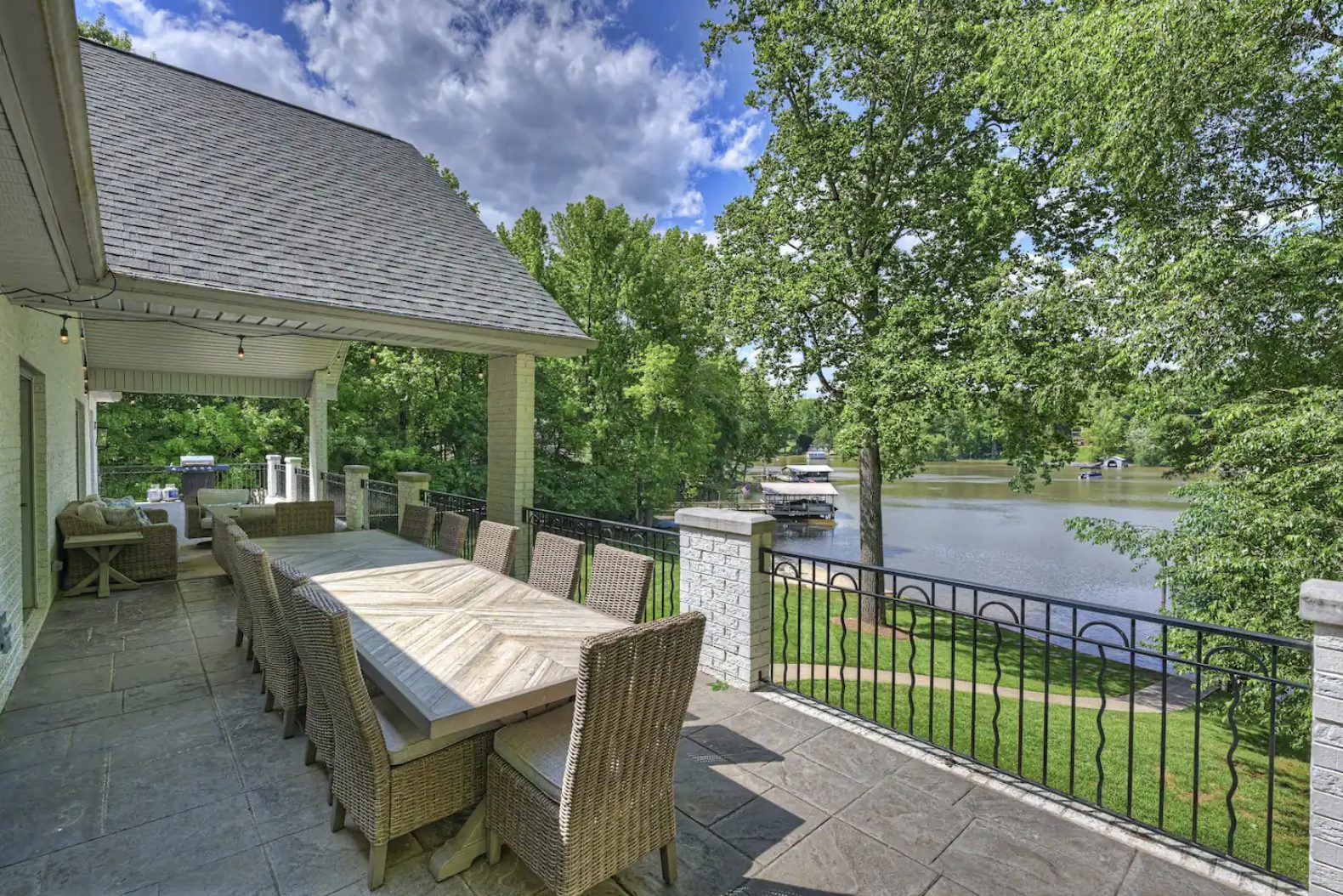
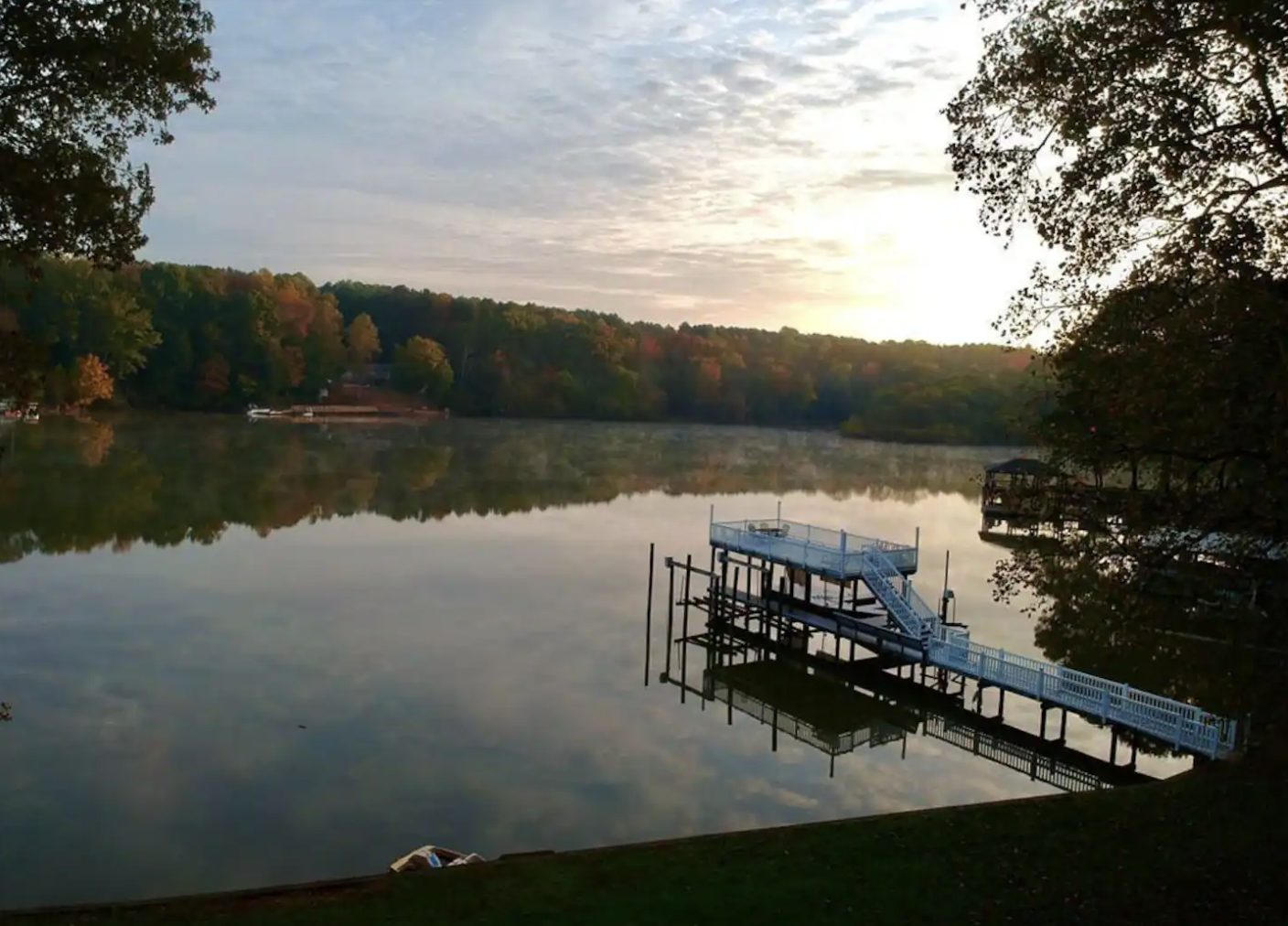
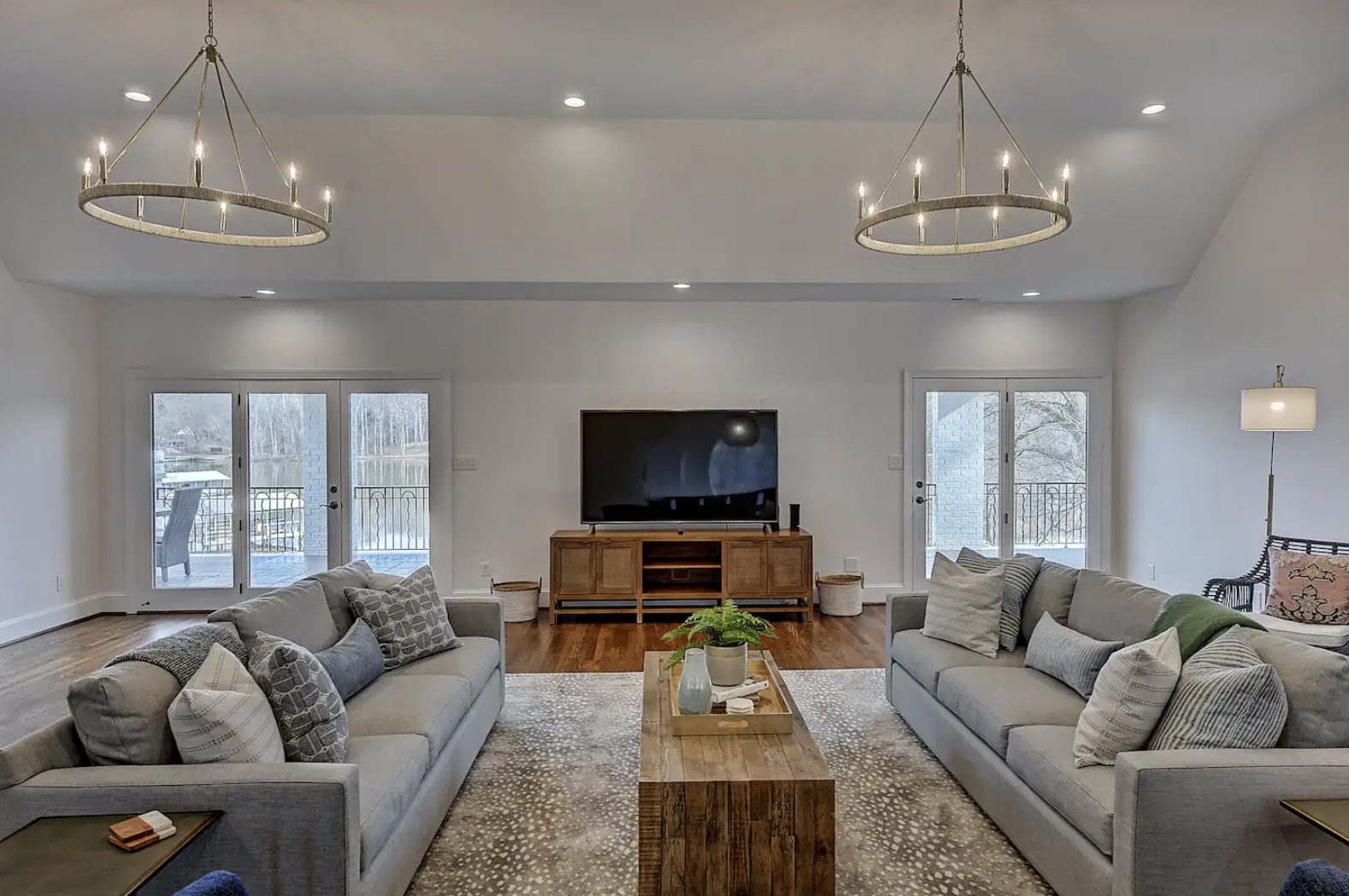
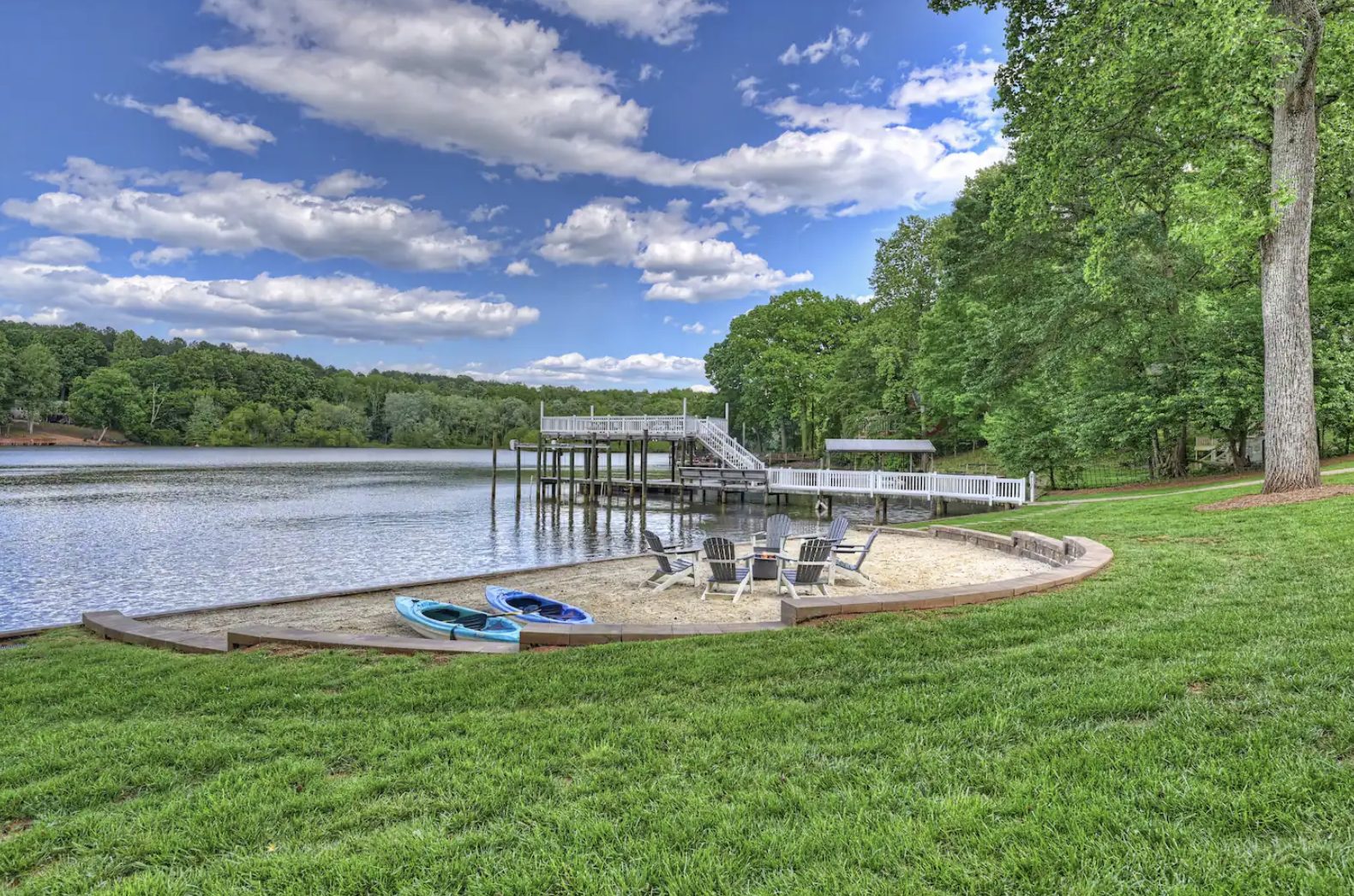
Every rental and ramp day above starts and ends with a drive, a line, and a parking lot. Staying in a lake house with its own dock deletes that part. At Windygap Retreat, on the Charlotte side of the lake, your group of up to 16 sleeps in 5 bedrooms and walks down to a private dock and beach. Bring your own boat and tie up, or spend the day swimming and kayaking from the house and rent a pontoon for one afternoon instead of three.
If that trade sounds right, book direct and skip the 12 to 15 percent platform fee. While you plan, the kayaking and paddleboarding guide covers the human-powered half of the lake.