Every manager who has sat through an offsite in a hotel ballroom knows the feeling. Fluorescent lights, a projector that won't connect, coffee from an urn, and twelve people politely waiting for the day to end so they can go back to their separate rooms and answer email alone.
The venue is not the whole retreat, but it decides a lot of it. Put a team in a windowless room and you get windowless thinking. Put the same team in a house on a lake, with room to spread out, cook together, and sit around a fire at night, and you get a different two days.
If you're planning a company retreat near Charlotte, here's the honest breakdown of your options — and what to check before you book any of them.
Your three real options near Charlotte
1. An Uptown hotel with a meeting package. This is the default, and sometimes it's the right call. You get a dedicated meeting room, AV that (mostly) works, catering on-site, and a room for everyone upstairs. You also pay for all of it: meeting room rental, food-and-beverage minimums, service charges, and $180–$280 a night per person for rooms. For a team that needs to impress clients or run a formal program, a hotel earns its price. For an internal team that mainly needs time together, it often doesn't.
2. A dedicated retreat or conference center. North and south of Charlotte there are a handful of these. They are built for groups, the staff knows how to run an offsite, and meals are handled. The trade-off is that you share the property with other groups, the schedule is theirs, and the place can feel like school camp for adults. Pricing is usually per person, per day, and it adds up fast for a two-night stay.
3. A large lake house. This is the option more Charlotte teams have landed on in the last few years, especially teams of 10 to 16. One house, everyone under one roof, your own schedule, your own food, and a lake outside the door. No other guests. No catering minimum. No meeting-room clock. The trade-off is real, and we'll get to it: you are the organizer. There is no banquet manager. If you want a flip chart, you bring a flip chart.
For leadership teams, founding teams, and whole companies under 16 people, the lake house wins more often than not — not because it's fancier, but because the group actually stays a group after 5 PM.
What a good retreat venue actually needs
Forget the brochure list. After hosting group stays on Lake Wylie, these are the things that make or break a work retreat:
Real beds for everyone, in real bedrooms. A house that sleeps 16 in 5 bedrooms works for a retreat. A house that "sleeps 16" with two people on a sofa bed in the living room does not — the living room is your meeting space, and somebody sleeping in it kills the morning start. Count bedrooms first, headline number second.
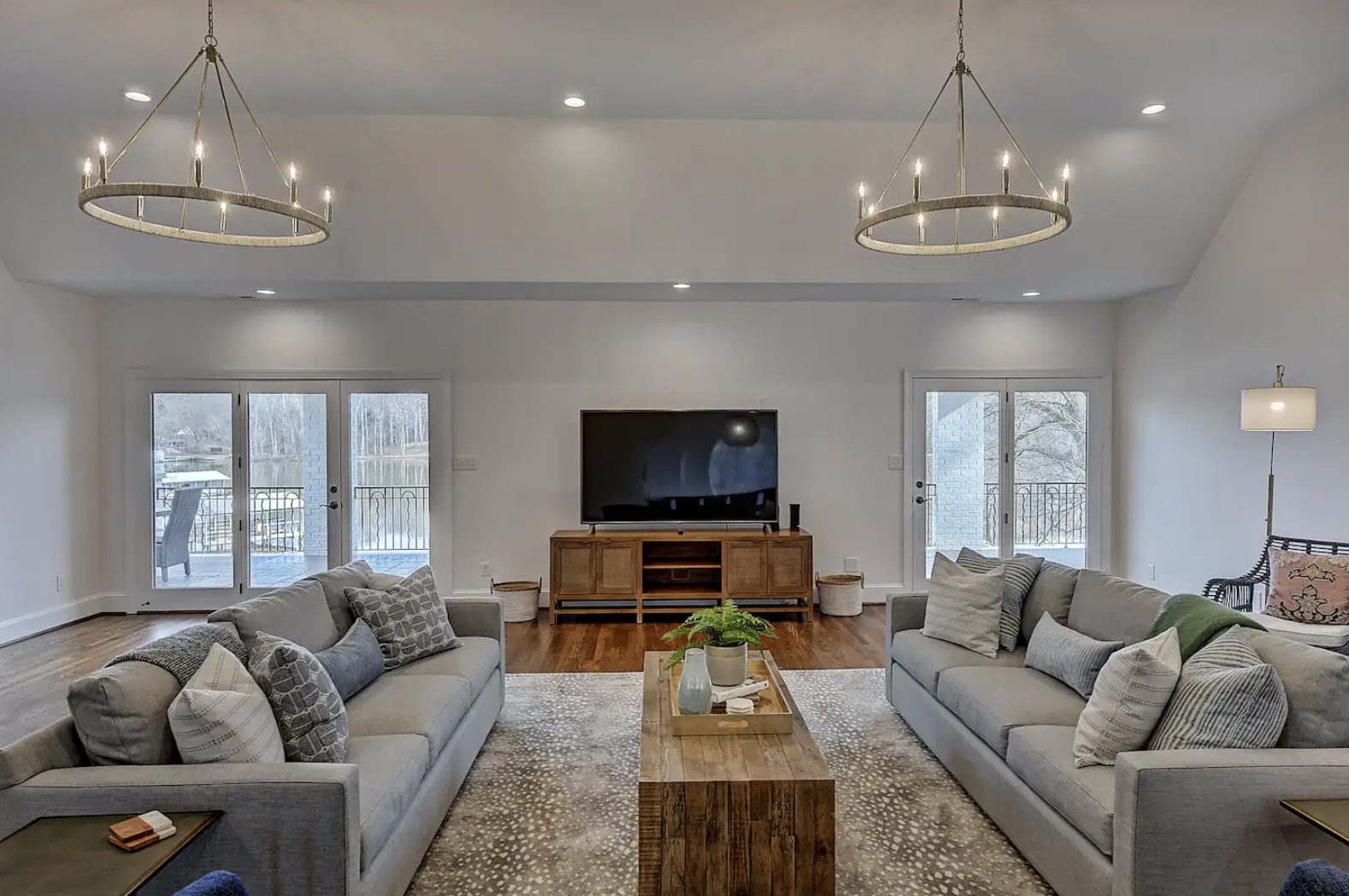
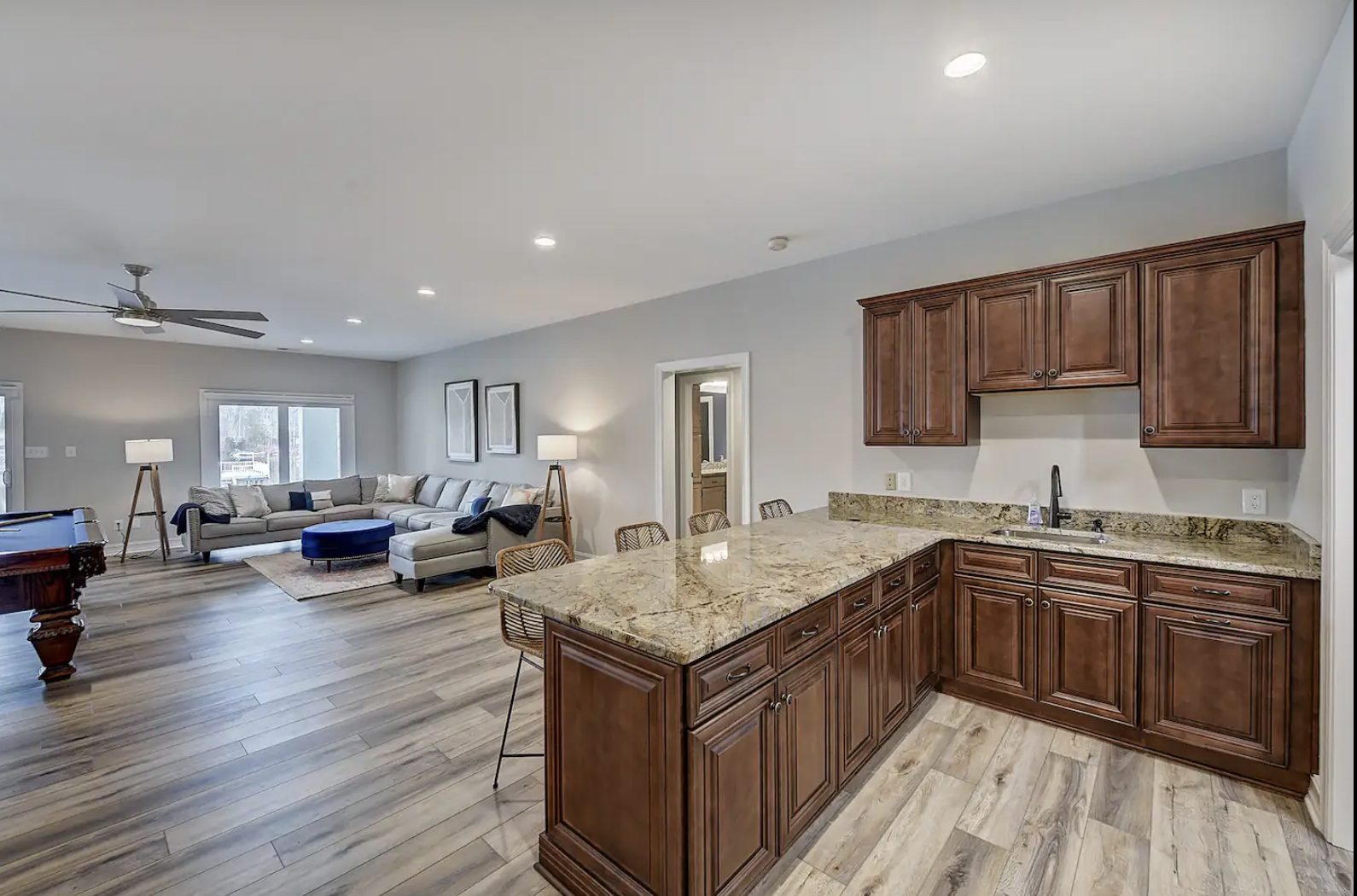
One big room where everyone can sit in a circle. That's your working room. You want a living room or open main space where 12 to 16 people can see each other without sitting in rows. Rows are for presentations. Circles are for the conversations an offsite is actually for.
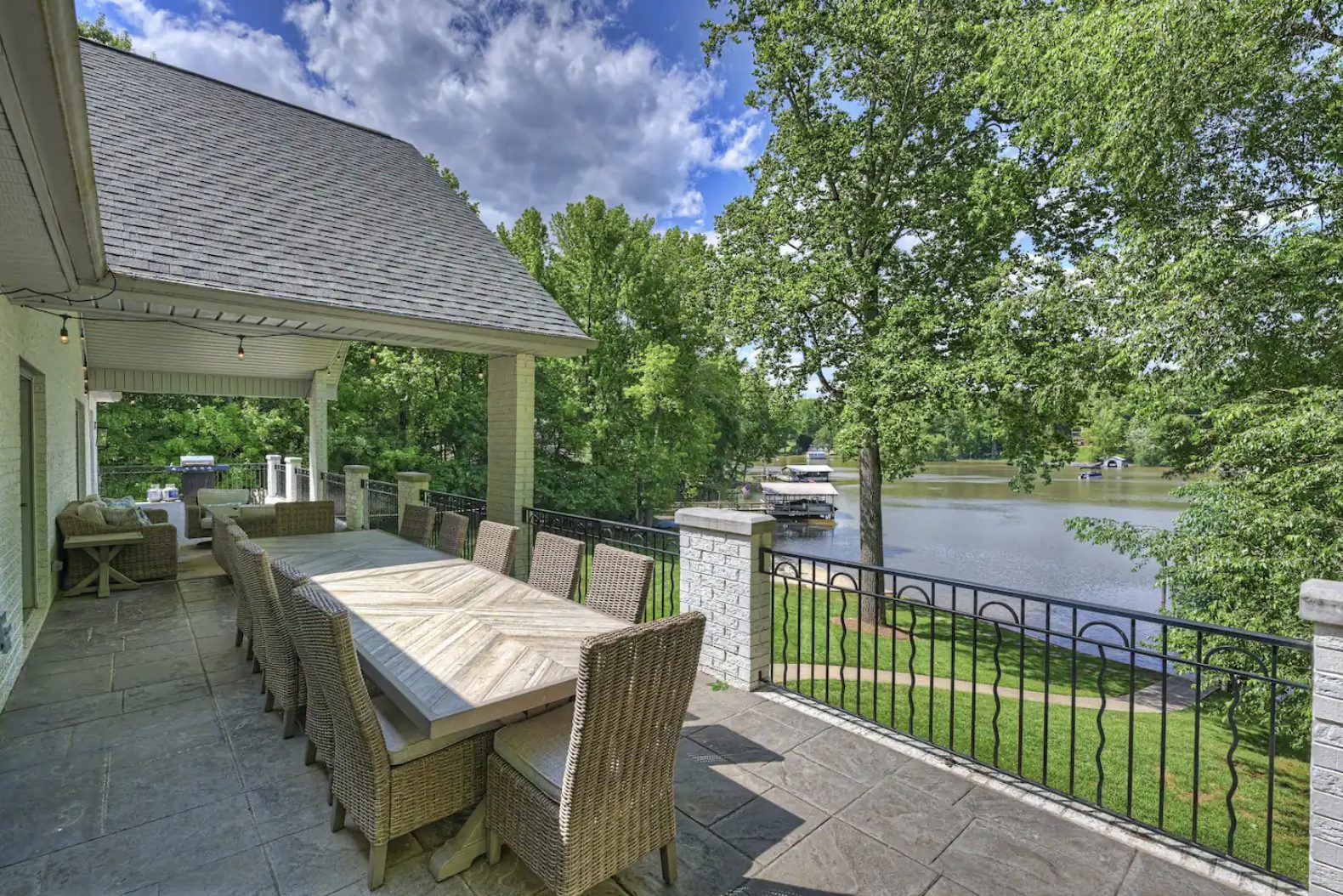
Breakout space that isn't a bedroom. A game room, a deck, a dock, a patio — you need two or three places where a group of four can go talk without shouting over the main group. Houses are good at this. Hotel ballrooms are not.
A kitchen that can feed the group. You will not cater every meal, and you shouldn't. A big group breakfast cooked together does more for a team than another catered buffet line. Check that the kitchen is a real kitchen, not a kitchenette, and that there's seating for most of the group to eat at once.
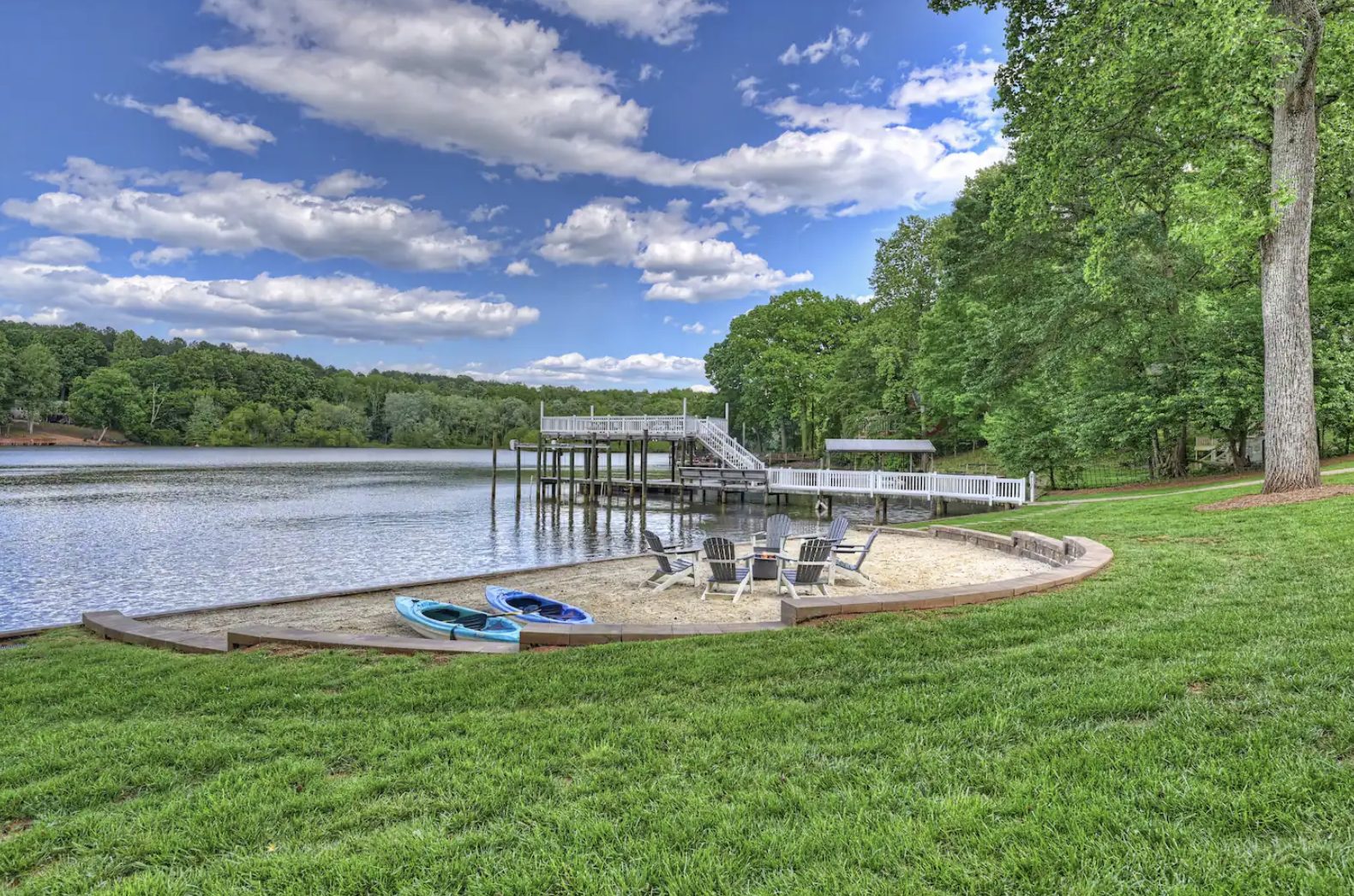
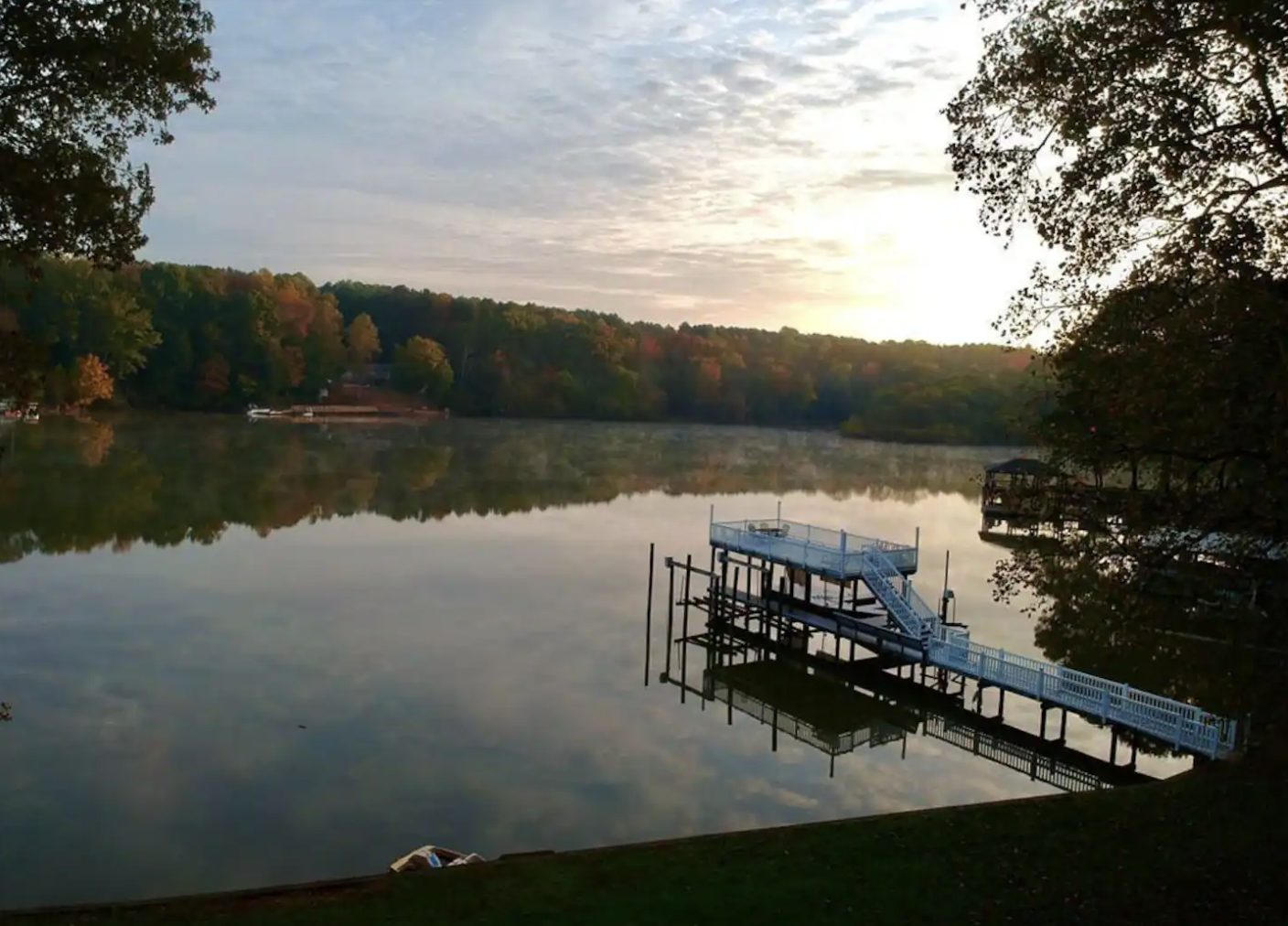
Outdoor space you'll actually use. A private dock and a private beach change the shape of the day. People go for a swim between sessions. Two people who needed to talk take the kayaks out. That is not wasted time — for most teams, that's the point of leaving the office. Add a hot tub and a fire pit and the evenings take care of themselves.
A short drive, not a road trip. About 25 minutes to Uptown Charlotte and about 20 minutes to CLT airport is the sweet spot. Close enough that local people aren't resentful about the drive and fly-ins aren't spending half of day one in a car. Far enough that nobody suggests popping back to the office.
A two-day itinerary that works
Don't over-program this. The retreats that fail are the ones with a color-coded agenda from 7 AM to 9 PM. Here's a rhythm that works for most teams:
Day one — arrive and settle - Check-in is 4 PM. Have the organizer and one helper arrive right at 4 to set up the main room, put drinks in the fridge, and claim a bedroom for supplies. Ask when you book direct whether early check-in for setup is possible on your dates — sometimes it is, and it helps. - As people arrive, let them find their rooms, change, and end up on the dock. Don't open with a session. Open with the lake. - Cook the first dinner together or get catering delivered — both work, cooking together is cheaper and looser. Eat late, sit at the fire pit after, and keep the work talk light. Night one is for people relaxing around each other.
Day two — the working day - Coffee early, big breakfast, first session by 9 when people are sharp. Do the hardest topic first: strategy, the problem nobody wants to name, next year's plan. Morning brains are better brains. - Break before lunch and actually break. Swim, kayaks, a walk. Twenty minutes on the water resets a room better than a coffee urn does. - Lunch at the house. Second session early afternoon — smaller groups, breakouts in the game room, on the deck, and at the dock. - Late afternoon is activity time. The U.S. National Whitewater Center is nearby and is the best organized group activity in the Charlotte area — rafting and ropes courses that get people laughing without a forced trust-fall in sight. If the team would rather stay put, a dock afternoon does the same job for free. - Last dinner out or in, fire pit, hot tub. This is usually the night the best ideas come up, so have someone sober enough to write them down.
Day three — land it - Slow morning, out by 11 AM check-out. Use the last hour for one thing only: who owns what, by when. Write it on one page before anyone leaves. A retreat that doesn't end with named owners and dates was a nice weekend, not a retreat.
One night can work for a small team that meets often. Two nights is better for almost everyone else — the first night people are still in work mode, and the real shift happens on day two.
What it costs, in plain numbers
For a lake house that sleeps 16 near Charlotte:
- Weeknights, off-season: roughly $500–$800 a night
- Weekends, spring and fall: roughly $800–$1,200 a night
- Food: $40–$75 per person per day if you cook most meals and cater or go out once
- Whitewater Center day passes and activities: budget separately, and book the group in advance
Split a $1,000-a-night house across 14 people and you're at about $71 per person per night for lodging — with a dock, a hot tub, and a game room thrown in. A hotel offsite for the same group, with rooms and a meeting package, is usually two to three times that per person before you've done anything fun.
Book direct. The same house listed on a big platform carries a 12–15% guest service fee on top. Book direct at windygap-retreat.com/book and that fee stays in your budget — it covers a catered dinner, easily. Direct booking also means you're talking to the actual owner about parking for a dozen cars, where a caterer can set up, and whether the team dog can come. Pets are allowed at Windygap, by the way — more than one retreat has been improved by it, though you should confirm the details when you book.
The trade-offs, said out loud
A lake house is not a conference center, and pretending otherwise sets you up to be annoyed.
- You run it. Agendas, food runs, ice, trash bags — that's your organizer. Pick someone who likes that job and give them the credit.
- You bring your gear. Laptop, a portable speaker, flip charts, sticky notes, and a power strip or two. Don't assume any rental house is stocked like an office.
- Sleeping arrangements take diplomacy. Five bedrooms and 14 adults means some sharing or some creative assignments. Settle who gets what before arrival, in writing, and give the organizer and any senior people the clear rooms first. Awkward bedroom politics at 10 PM is a dumb way to start day two.
- Respect the neighbors. Lake houses have quiet hours, usually around 10 PM outside. The fire pit at midnight is fine. Amplified music on the dock at midnight is not, and a good host will tell you that up front.
None of that is a deal-breaker. It's just the list to plan around, and teams that plan around it have a better time than teams in a hotel.
Questions to ask before you book any venue
- How many real bedrooms, and what beds are in each one?
- Where will all of us sit, together, to work?
- What's the parking situation for 6 to 10 cars?
- Can a caterer deliver or set up there, and is there fridge space for it?
- What's the cancellation policy if headcount drops?
- How close are the neighbors, and what are quiet hours?
- If we book direct, what's included that the platform listing charges extra for?
A host who answers those straight is a host you want. Vague answers on beds and parking are the two biggest red flags in this whole category.
The short version
For a Charlotte-area team of 10 to 16, skip the ballroom. Book a real lake house with enough bedrooms, one big room to work in, breakout space, a kitchen that feeds everyone, and a dock to end the day on. Work hard in the mornings, get on the water in the afternoons, and finish around the fire pit. Two nights, one page of decisions at the end, and book direct so the platform fee pays for dinner instead.
If that sounds like your team, check dates and book direct — and tell the owner it's a work retreat when you inquire. You'll get straighter advice on setup, sleeping arrangements, and timing than any listing page will give you.