A church retreat for ten to sixteen people has a different shape than a family vacation or a company offsite. The program is the point: sessions, prayer, worship, hard conversations, and enough unstructured time for people to actually talk to each other. But the program runs on logistics, and the logistics are meals, beds, meeting space, and quiet. Near Charlotte, a small church group has two real options, and they are genuinely different. This guide compares them honestly, including when the other one is the right answer.
Option one: a retreat center at camp
The established name on the lake is YMCA Camp Thunderbird, on the South Carolina side of Lake Wylie in the town of Lake Wylie, about 30 minutes from Charlotte. The camp sits on nearly two miles of Lake Wylie shoreline and has been running for about 90 years. When its summer overnight and day camps are not in session, it operates a retreat center for groups of all kinds, school, church, civic, corporate, and it says so plainly. You get cabins, large meeting halls, food service, and a long activity list, all run by staff whose whole job is groups. Their retreats and rentals page has the current details.
Camp is the right call when: your group is bigger than 16, you want meals handled entirely, you need accessibility across many buildings, or your budget process needs a tidy per-person invoice. Camps are built for youth groups, multi-church gatherings, and weekends where the program needs a dining hall and a schedule.
Camp costs you: privacy and flexibility. You share the property with other groups, meals run on the camp's clock, lights-out and quiet policies are theirs, and the setting, however good, is an institution. For a leadership retreat or a small group working through something delicate, that matters.
Option two: a private lake house
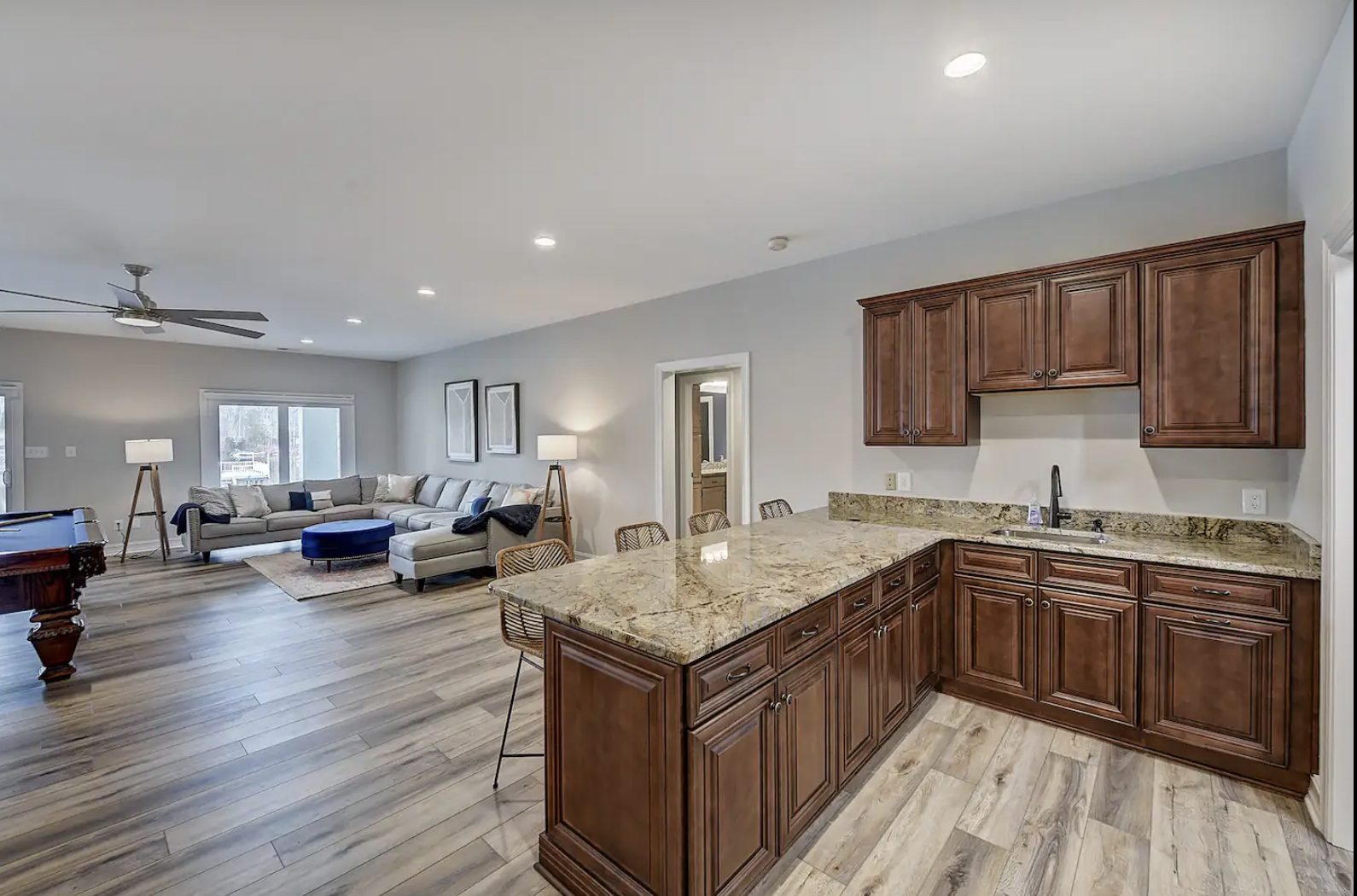
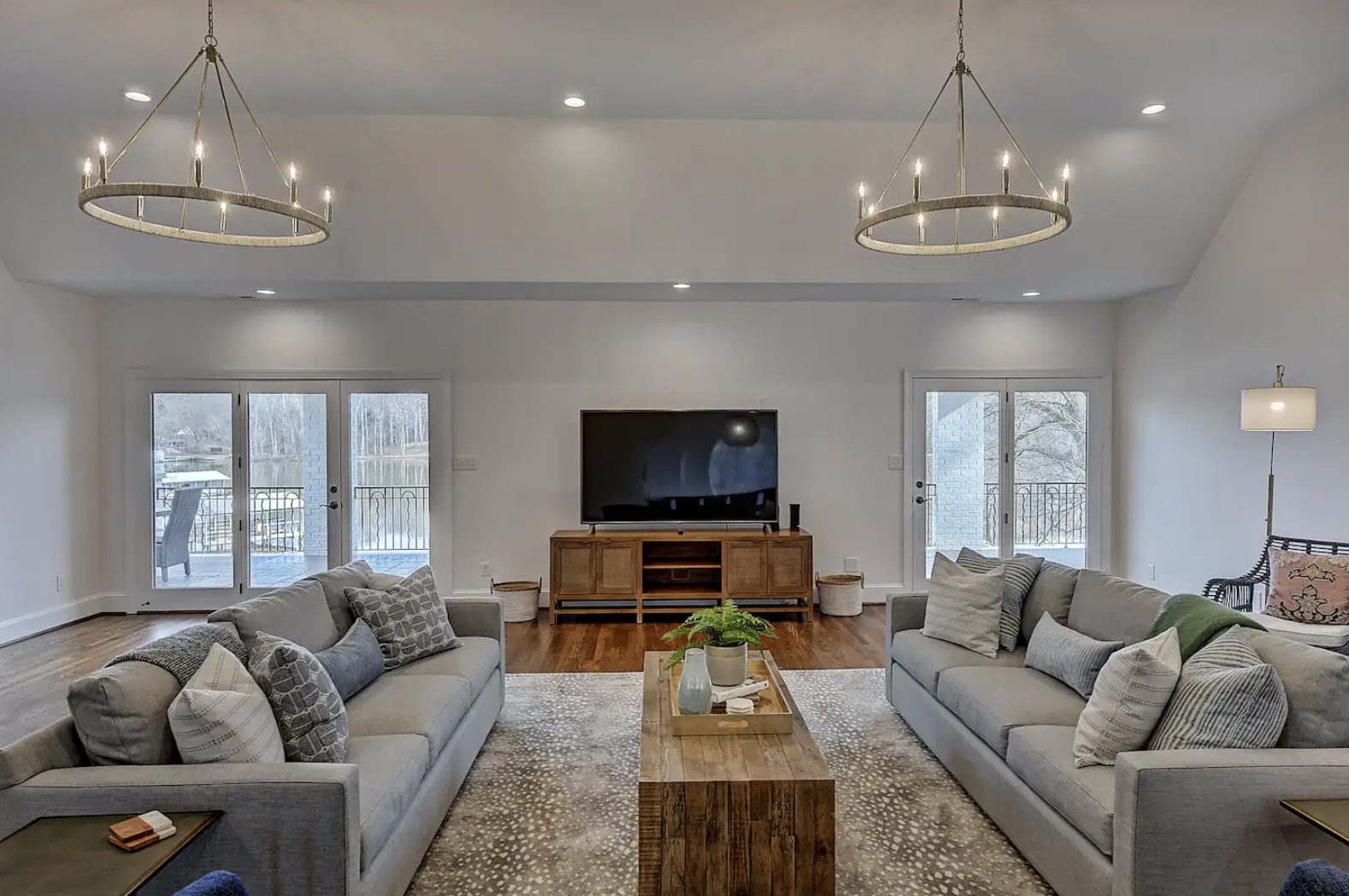
A house like Windygap Retreat sleeps 16 in 5 bedrooms on Lake Wylie, about 25 minutes from Uptown Charlotte, and for a weekend it is simply yours. One building, one group, your own schedule down to when breakfast happens. The living room seats everyone in a circle for sessions. The game room, patio, and dock give you three breakout spaces that are not bedrooms. The kitchen is a real kitchen, and the fire pit at night does what fire pits have done for retreats forever: it is where people say the true things.
This is the same formula that works for company offsites, covered in our corporate retreat venues guide, with two differences. Church groups usually cook more of their own food, which stretches a ministry budget further, and the schedule usually wants one block of real quiet, early morning on the dock, which a single-group property makes easy.
The house is the right call when: the group is 10 to 16, the conversations are the program, the budget is a church budget, and one or two people are happy to run the kitchen. It is the wrong call when the group is 30, when nobody wants to cook, or when the weekend needs staff, a sound system, and a dining hall. Be honest about which retreat you are running.
Meal logistics for 10 to 16, without a dining hall
This is the question every house-retreat organizer asks first, and it is manageable with a plan:
- Assign meal teams of two or three per meal, drawn from the group, with the organizer exempt. People bond over cooking; they resent being the only cook.
- Cook big and simple. Breakfast casseroles made the night before, a taco bar, soup and sandwiches at lunch, one pasta or grill night. Budget $40 to $75 per person per day depending on how ambitious the menu gets, and buy it in one or two large grocery runs rather than daily trips.
- Cater one meal. Saturday lunch or the final dinner, delivered, gives the meal teams a break and marks the weekend's peak session with a meal nobody had to produce.
- Coffee is infrastructure. Start it before the first session and never let it run out. This sounds like a joke and is not.
Quiet hours and being a good neighbor
Lake houses sit in neighborhoods, and retreat groups should plan on outdoor quiet after about 10 PM. Singing around the fire pit at 9 is fine; amplified worship on the dock at 11 will end with a host conversation nobody wants. Build the loud parts of the program into the afternoon and early evening, and let the late hours be the low-volume ones. Most groups find this costs the program nothing. The conversations after 10 are usually better quiet anyway.
A two-day rhythm that works
Friday: Arrive by the 4 PM check-in, settle rooms, cook the easy first dinner together, and hold one opening session in the living room. Keep it short. Night one is for arriving and for people to stop performing their week.
Saturday: Coffee and quiet time on the dock before breakfast. Main session mid-morning, when people are fresh. Lunch, then a long unstructured block: swimming, kayaks, a walk, naps, one-on-one conversations on the beach. Second session in the late afternoon. Dinner, then the fire pit, with the last session held there if the topic suits it.
Sunday: Slow morning, closing session and communion or final commitments if that is your tradition, and out by the 11 AM checkout. End with names and dates attached to whatever the group decided, written down before anyone leaves.
For groups bringing families or combining with a reunion-style weekend, the family reunion planning guide covers the multi-generation version of the same logistics.
Keeping the cost inside a church budget
Church money gets watched more carefully than vacation money, and it should be. Three habits keep a house retreat defensible to any finance committee. First, pick the date with the rate in mind: off-season weeknights at a large lake house run $500 to $800 against $800 to $1,200 for peak weekends, and a Friday-to-Saturday retreat or a midweek leadership retreat can nearly halve the lodging line. Second, collect per-person deposits when people register, not the week before; a retreat where the organizer fronts the full amount teaches the group the wrong lesson and the organizer a worse one. Third, put the split in writing in the first announcement: lodging divided by heads, food as a flat per-person amount, one catered meal in the shared pot, everything optional paid by whoever opts in. A one-page budget the group can see beats a verbal estimate every time, and it makes next year's retreat easier to approve.
The short version
Over 16 people or no cooks: book the camp, and Camp Thunderbird is a good one. Sixteen or under, with a program built on conversation: book the house, run your own schedule, cook most of your meals, and keep the platform fee in the ministry budget. Windygap Retreat sleeps 16 in 5 bedrooms on Lake Wylie, with a living room that seats the group in a circle, a private dock and beach, and a fire pit for the last session of the night. Check your dates and book direct, and tell the owner it is a church retreat when you inquire. You will get straight answers on quiet hours, parking, and day visitors, which is what a retreat organizer actually needs.